
Inside the PowerPoint Party Trend: And How Gen Z is Reinventing the Slideshow
Don't let your presentations become the entertainment center piece. Learn how to accelerate and be the champion of presentations!
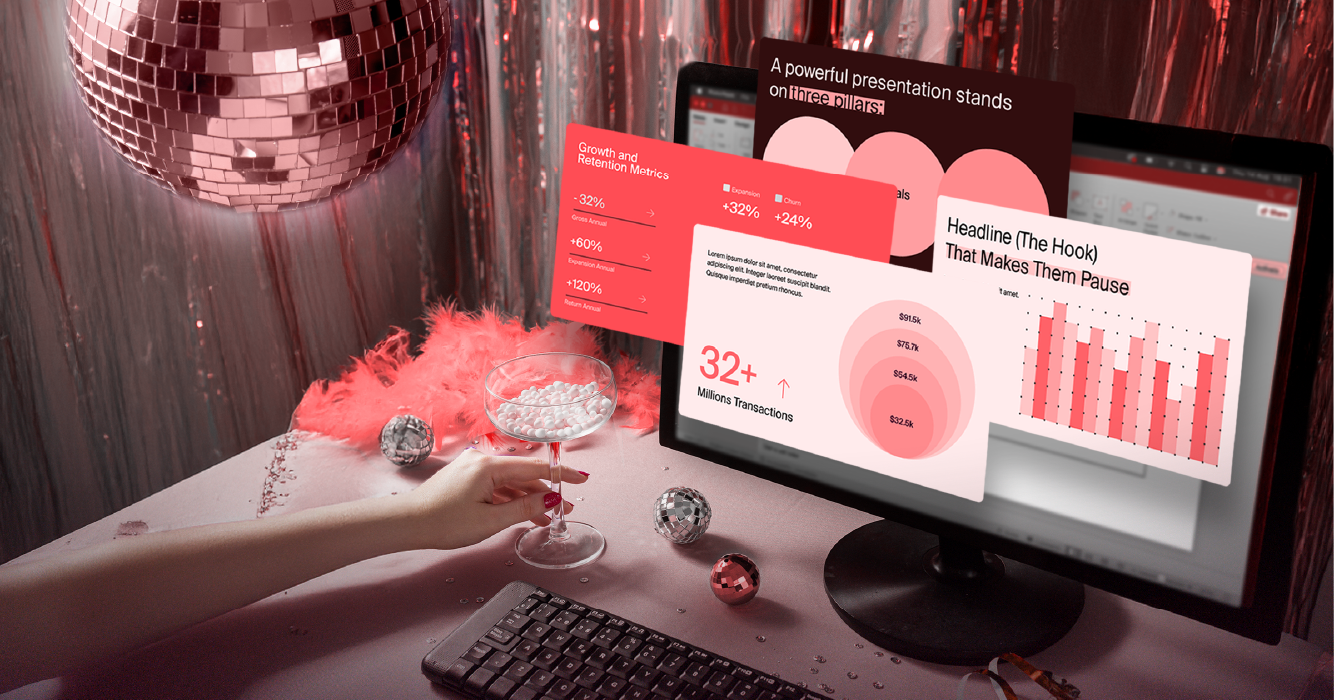
The Corporate Nightmare Becomes the Social Highlight
Your employees are hosting PowerPoint parties in their spare time. Let that sink in. The same software that makes executives break out in cold sweats at 2 AM is now the entertainment centerpiece for Gen Z social gatherings. While you're wrestling with alignment issues and font inconsistencies, they're crafting elaborate presentations about which friend would survive longest in a zombie apocalypse. The irony is almost too perfect.
Why This Matters for Your Business Strategy
This article explores how Generation Z has transformed presentation software from a corporate necessity into social entertainment, what this reveals about evolving communication preferences, and why understanding this trend could revolutionize how your organization approaches presentations and engagement.
What You'll Learn:
1. The Psychology Behind PowerPoint's Social Transformation
2. How Gen Z Communication Patterns Are Reshaping Professional Expectations
3. Strategic Applications for Executive Presentations
4. The Future of Visual Communication in Business
1. From Conference Room to Living Room
The PowerPoint party phenomenon didn't emerge overnight. The trend gained significant momentum during the COVID-19 pandemic when friends sought creative ways to connect virtually, with over 40 million views on TikTok under related hashtags (CNN, 2024). But here's what's fascinating: the concept actually originated in 2012 when four engineering students at Ontario's University of Waterloo—Megan, Michael, Derek, and Munt—started a party called "Drink Talk Learn" that quickly spread to other cities including Toronto, Seattle, San Francisco, Edmonton, and New York (BuzzFeed News, 2018).
What started as a quirky college experiment has evolved into a mainstream social activity. Groups of friends now task themselves with presenting silly slideshows on niche interests, secret pastimes, and frequently hilarious takes on each other's quirks. According to CNN (2024), "PowerPoint parties task a group of friends with presenting a silly slideshow on niche interests, secret pastimes and frequently hilarious takes." The subjects range from analyzing which animated characters are most attractive to predicting survival rates in fictional apocalypse scenarios.
The transformation reveals something profound about how digital natives interact with technology. Unlike previous generations who compartmentalized work tools and social activities, Gen Z seamlessly blends professional software with personal expression. As noted by Chang and Chang (2023) in their study published in SAGE Open, "Gen Zers spend more time on their phones than with actual people, and communication through their phones has become a new form of socialization."
2. The Business Implications You Can't Ignore
This trend exposes a critical disconnect in corporate America. While executives struggle with presentation anxiety and spend countless hours on formatting, Generation Z demonstrates specific attention patterns and communication preferences that reshape workplace expectations. Research indicates that Gen Z has an attention span of approximately 8 seconds, compared to 12 seconds for Millennials (UCAS, 2024; Golden Steps ABA, 2023). They're literally showing you how presentations should work.
The business ramifications are staggering. Research from SAGE Journals indicates that Gen Z spends more time communicating through phones than with actual people, and this digital communication has become their primary form of socialization (Chang & Chang, 2023). When these digital natives enter your workforce, they bring expectations shaped by interactive, engaging, and authentically entertaining communication styles.
Consider the cognitive dissonance: your newest employees are creating compelling presentations for fun while your leadership team treats every slideshow like medieval torture. A study in the International Journal of Environmental Research and Public Health found that Gen Z nursing students "prefer active learning such as observation and experiential practice compared to traditional teaching methods" and have an attention span of 8 seconds (12 seconds for Millennials) (Muñoz-Rodríguez et al., 2020). They've been trained by platforms that reward creativity, authenticity, and engagement.
3. The Strategic Framework for Presentation Innovation
Here's where smart executives start paying attention. The PowerPoint party trend is beyond social media fodder in audience engagement that reveals four critical success principles your organization should adopt immediately.
The Authenticity Framework
Research on Generation Z values published in Frontiers in Sociology emphasizes their preference for authentic, transparent communication over polished corporate messaging (Gemelli et al., 2024). PowerPoint parties succeed because they prioritize genuine connection over perfect execution. The presentations are intentionally informal, often self-deprecating, and focused on entertainment value rather than flawless delivery.
Strategic Application: Replace rigid presentation templates with flexible frameworks that allow personality to emerge. Encourage executives to share relatable struggles, use conversational language, and acknowledge when they don't have all the answers. Gen Z values transparency and expects honest, direct communication without corporate doublespeak.
The Visual Storytelling Method
PowerPoint parties demonstrate something corporate presentations often miss: the power of narrative structure combined with visual engagement. Successful party presentations follow a clear story arc setup, conflict, resolution—wrapped in engaging visuals and interactive elements.
Implementation Strategy:
🪝 Lead with the hook: Start every presentation with a compelling scenario or question
👥 Use the "friend test": If you wouldn't present this content to friends, it's probably too boring for colleagues
🔍 Embrace imperfection: Polished doesn't always mean effective
🎉 Include interactive moments: Build in opportunities for audience participation
The Attention Economy Optimization
Generation Z's 8-second attention span forces presenters to front-load value and maintain engagement throughout (ContentGrip, 2025; LinkedIn Learning, 2019). PowerPoint parties succeed because they respect this constraint, delivering immediate entertainment value and maintaining momentum through strategic pacing.
Executive Framework:
① The 30-Second Rule: Every slide must deliver value within 30 seconds
② The Variety Principle: Alternate between different content types (data, storytelling, interaction)
③ The Momentum Method: End each section with a hook that creates anticipation for the next
The Community Engagement Model
Research published in the European Journal of Investigation in Health, Psychology and Education indicates that digital natives leverage social networks for validation and feedback more than previous generations (Herrero-Diz et al., 2024). PowerPoint parties create shared experiences that strengthen social bonds through collaborative humor and mutual storytelling.
Business Translation: Transform presentations from one-way information dumps into collaborative experiences. Use techniques like:
👥 Audience polling during key decision points
🗣️ Breakout discussions between presentation segments
👨💻 Follow-up sessions that build on presentation themes
📲 Shared digital spaces for continued conversation
4. The Executive Action Plan
The PowerPoint party trend offers a blueprint for transformation, but implementation requires strategic thinking. Start by auditing your current presentation culture. Are your executives dreading every slideshow? Are audiences checking phones during key presentations? These symptoms indicate you're fighting against communication evolution instead of leveraging it.
Begin with pilot programs that incorporate social presentation principles into internal meetings. Test interactive formats, experiment with storytelling structures, and measure engagement levels compared to traditional approaches. Research from Edison Mail found that Gen Z's core communication channels are SMS (69%), email (31%), and social media (29%), with 80% of Gen Z trusting online reviews as much as personal recommendations (Fast Company, 2024), meaning their feedback on presentation effectiveness will be brutally honest and valuable.
The companies that recognize this shift early will gain competitive advantages in recruitment, internal communication, and client engagement. While competitors struggle with presentation anxiety and audience disengagement, you'll be speaking the language of the future workforce.
Ready to Transform Your Presentation Culture?
Your presentations don't have to be the part of leadership everyone dreads. While Gen Z turns slideshows into social entertainment, you could be turning them into strategic advantages. The tools exist, the principles are proven, and the audience is waiting for something better than bullet points and clip art.
Let's discuss how Article 36 can help you bridge the gap between corporate necessity and genuine engagement. Your strategy deserves presentations that connect, not just inform.
References:
• BuzzFeed News. (2018, January 16). People are loving these photos from a party where every guest has to do a 3-minute PowerPoint presentation. https://www.buzzfeednews.com/article/ryanhatesthis/people-are-loving-these-photos-from-a-party-where-every
• Chang, C. W., & Chang, S. H. (2023). The impact of digital disruption: Influences of digital media and social networks on forming digital natives' attitude. SAGE Open, 13(3). https://journals.sagepub.com/doi/full/10.1177/21582440231191741
• CNN. (2024, March 25). TikTok-inspired PowerPoint parties are bringing friends together. https://www.cnn.com/2024/03/25/us/tiktok-powerpoint-parties-presentation-nights-cec/index.html
• ContentGrip. (2025, April 2). Gen Z content marketing: Attention span vs. value perception. https://www.contentgrip.com/gen-z-content-strategy/
• Fast Company. (2024, February 6). What I've learned about the new era of communication from my Gen Z kids. https://www.fastcompany.com/90819951/what-ive-learned-about-the-new-era-of-communication-from-my-gen-z-kids
• Gemelli, C., Ranieri, M., & Nencioni, G. (2024). Generation Z, values, and media: From influencers to BeReal, between visibility and authenticity. Frontiers in Sociology, 9, Article 1305360. https://pmc.ncbi.nlm.nih.gov/articles/PMC10809394/
• Golden Steps ABA. (2023, August 30). Average human attention span (statistics). https://www.goldenstepsaba.com/resources/average-attention-span
• Herrero-Diz, P., Sánchez-Martín, M., Muñoz-Bellerin, M., & Reyes-de-Cózar, S. (2024). Social media usage habits of Generation Z. European Journal of Investigation in Health, Psychology and Education, 14(7), 2054-2065. https://pmc.ncbi.nlm.nih.gov/articles/PMC11284647/
• LinkedIn Learning. (2019, October 3). Eight seconds: Gen Z's attention span - Marketing to Generation Z. https://www.linkedin.com/learning/marketing-to-generation-z/eight-seconds-gen-z-s-attention-span
• LivePerson. (2017, October 17). Gen Z and Millennials now more likely to communicate with each other digitally than in person [Press release]. PR Newswire. https://www.prnewswire.com/news-releases/gen-z-and-millennials-now-more-likely-to-communicate-with-each-other-digitally-than-in-person-300537770.html
• Muñoz-Rodríguez, J. M., Hernández-Serrano, M. J., & Tabernero, C. (2020). Social media use and teaching methods preferred by Generation Z students in the nursing clinical learning environment: A cross-sectional research study. International Journal of Environmental Research and Public Health, 17(21), 8267. https://www.ncbi.nlm.nih.gov/pmc/articles/PMC7664855/
• UCAS. (2024, October 29). How to capture the eight-second attention span of Gen Z. https://www.ucas.com/connect/blogs/how-capture-eight-second-attention-span-gen-z
Related articles




Ready to Take Your Presentations to the Next Level?


.webp)


.webp)
